
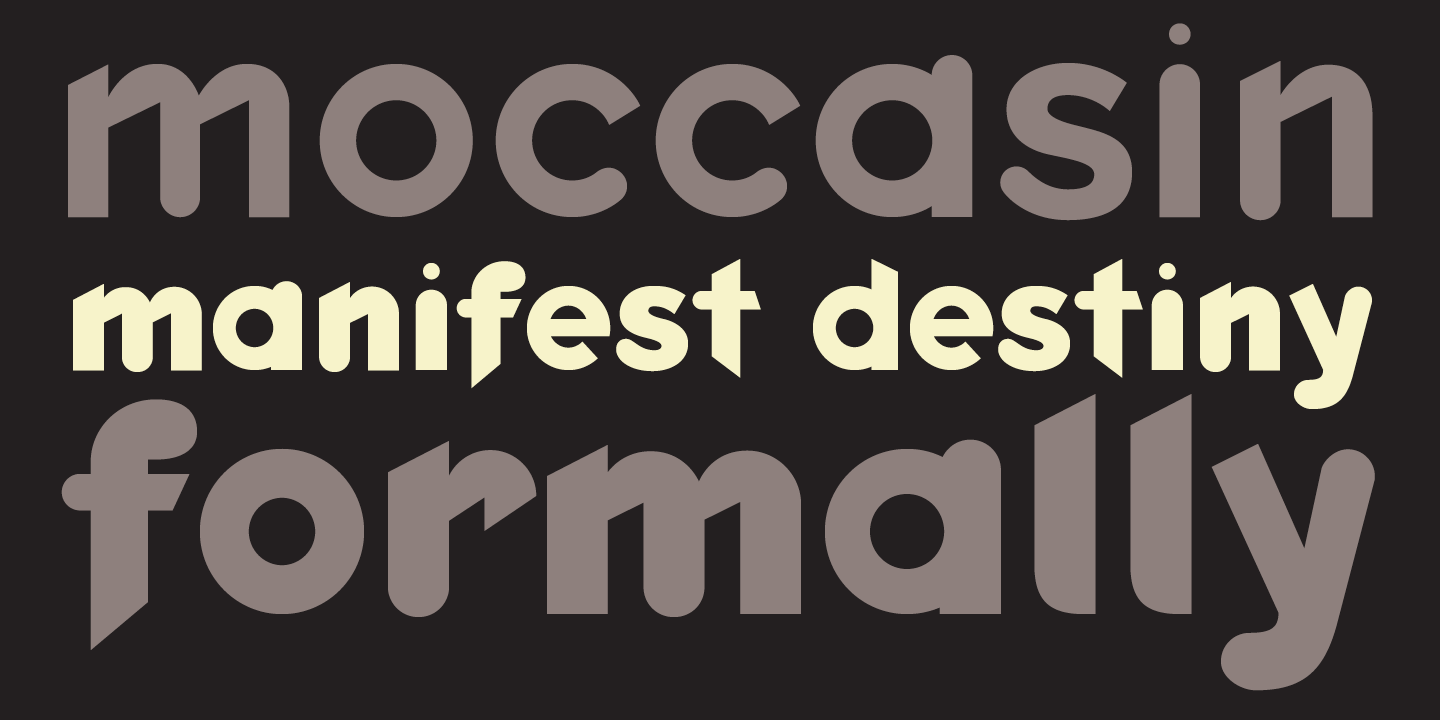
Keedy
By Jeffery Keedy
This text was first published in 2002 in the specimen booklet for Keedy Sans.
In 1989 I designed a typeface to use in my design work
for experimental arts organizations like Los Angeles Contemporary
Exhibitions and CalArts. I called the typeface Bondage Bold. Rudy
VanderLans saw it in some of my work and wanted to sell it through Emigre.
After adding a regular weight, normalizing the spacing, cleaning up the
drawings (with Zuzana Licko's guidance), and changing the name to Keedy Sans, it was finally released on an unsuspecting public in 1991.
I designed Keedy Sans as a "user," simply
based on a vague idea of a typeface that I had not yet seen but wanted to
use in my graphic design. Most typefaces are logically systematic; if you
see a few letters you can pretty much guess what the rest of the font will
look like. I wanted a typeface that would willfully contradict those
expectations. It was a typically postmodern strategy for a work to call
attention to the flaws and artifice of its own construction. But I never
thought of it as being illegible, or even difficult to read. I have never
been very interested in pushing the limits of legibility for its own sake.
Absolute clarity, or extreme distortion, is too simplistic a goal, and it
is ground that has already been well covered. I wanted to explore the
complex possibilities that lie somewhere in between and attempt to do
something original or at least unique.
At the time I had been using the American highway
Gothic typeface in my design work that I cut and pasted from a highway
signage manual. Another vernacular influence was the "f" from
the Fiat logo. But I was not only quoting low vernacular sources; it was
important that I mixed in high design sources as well. So I was thinking
about Akzidenz-Grotesk Black, which was somewhat exotic in America, because
I liked Wolfgang Weingart's typography. Overall I wanted a typeface that
was similar to Cooper Black, extremely bold with a strong idiosyncratic
personality. I think it is a very postmodern typeface in that it included
"high" and "low" vernacular quotation, and it is
self-consciously crude and anti-aesthetic in reaction to the slickness of
Modernism. The initial reaction to Keedy Sans was that it was too
idiosyncratic, it was "ugly," hard to read, and too weird to be
very useful. It's hard to imagine that kind of reaction to a type
design today. I guess nobody really cares any more.
In 1993, Keedy Sans was still able to cause a bit of
controversy among graphic designers, and it was starting to be a popular
typeface for music and youth-oriented audiences. Its popularity slowly but
consistently grew; by 1995 it was starting to look pretty legible and tame
compared to other new typefaces on the market. Eventually even the big boys in the corporate world were no longer put off by my typographic antics, and Keedy Sans made its way into the mainstream world of corporate
commercialism by 1997.
Eight years later, it is no longer considered an
illegible, weird, deconstructed, or confrontational design. Now it's
just another decorative type style, one among many. Its willful
contradictions are only what is expected in design today. I still think it
is an interesting typeface; that's why it's a shame that now it
signifies little more than the banality of novelty. Nowadays that seems to
be all a designer can expect from their work.
Keedy Main Page
|  | |